Your buyers are asking ChatGPT who to hire. Here is how to be the name it says.

Founder, Red-engage. Free to read, no email required.
Read this part if you read nothing else
What this page is: a plain explanation of how B2B buyers now use ChatGPT, Perplexity and Gemini to pick vendors, a free way to test whether you get named, and the exact three step process we run for clients who do not.
Who it is for: companies with deal sizes big enough that buyers compare options before they call you.
What I want: if it lands, run the free scan. It asks live AI assistants your buyer questions and shows you who gets named instead of you. No email needed to see your score.
Let me tell you what happened, because it is quick.
A client called me on a Tuesday. Good product. Sales team that could close. Two years of work together.
Their rankings had not dropped. Their traffic was flat, not falling. But the demo requests had gone quiet, and they had been quiet for a full quarter.
So I opened the reports. And here is the uncomfortable part.
Every number I had trained myself to watch said the business was fine.
The business was not fine. So I closed the reports and opened a chat window instead.
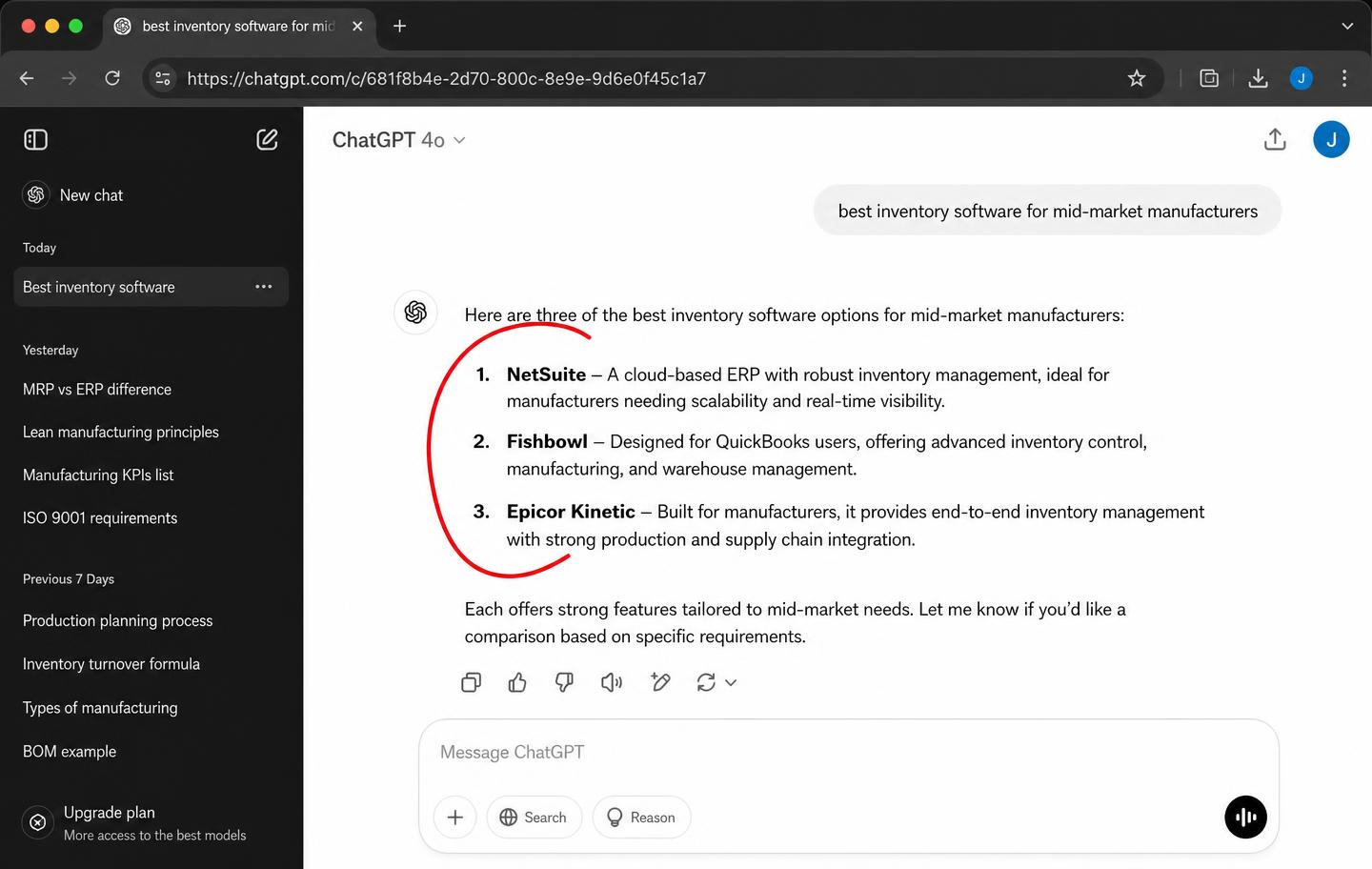
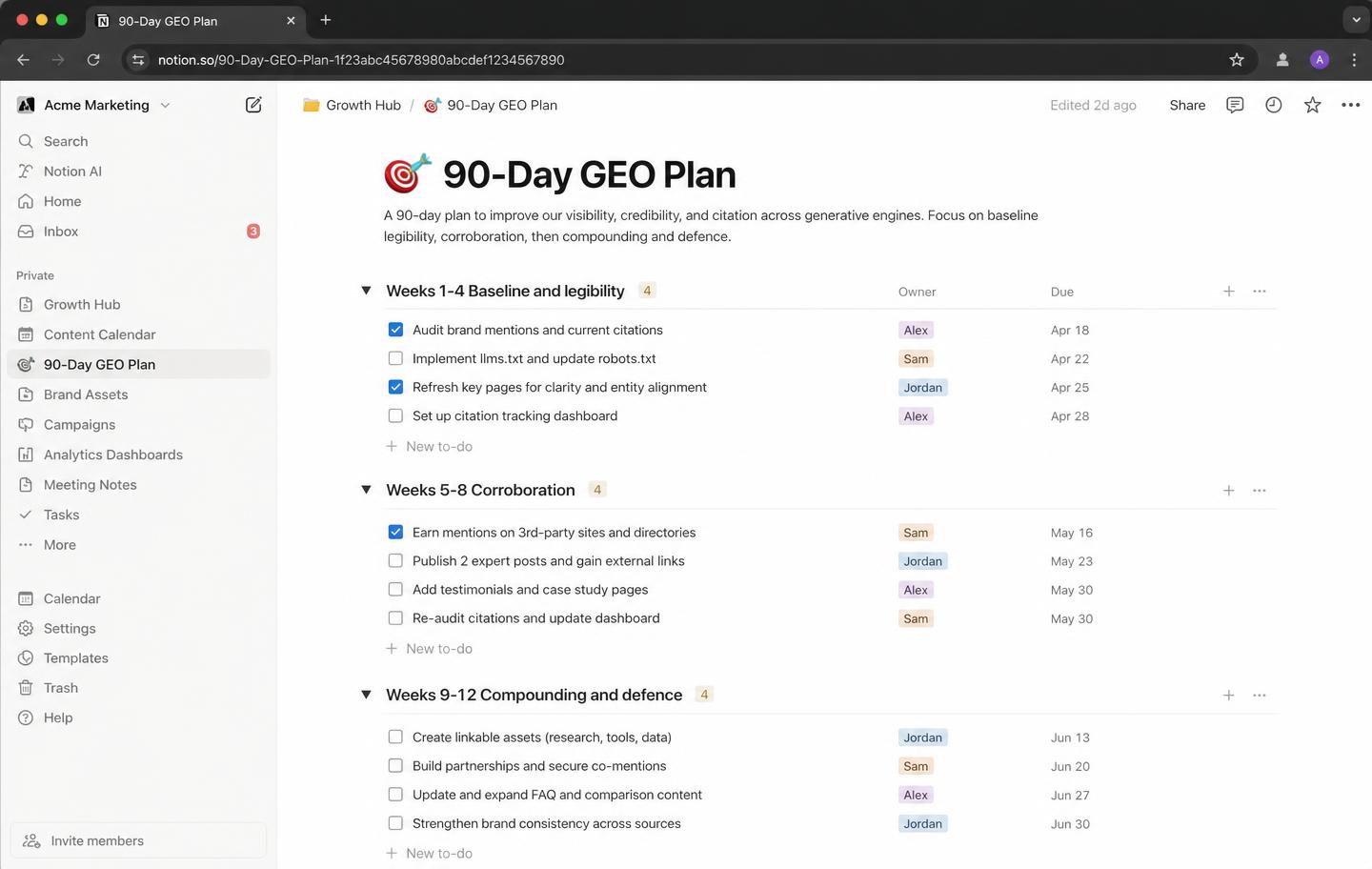
I typed the question their buyer would actually type. Not their brand name. The problem. Then I ran the same thing in Perplexity, then Gemini.
Three competitors came back by name. My client did not appear once. Not lower down the answer. Not at all.
I had been telling clients the same thing for years. Get rankings, get traffic, get pipeline. In that order.
That was true for a long time. It quietly stopped being reliable, and I did not spot it on my own. A client spotted it for me.
Your buyer did not stop researching. They stopped browsing.
Ten blue links turned into one answer with a few names in it. If you are not one of those names, you are not in the conversation. There is no page two to be on.
The whole thing in one sentence
Do not take my word for it. Test it in ten minutes.
You do not need a tool for this. You do not need me for this. Do it today and you will know more about your visibility than your last three reports told you.
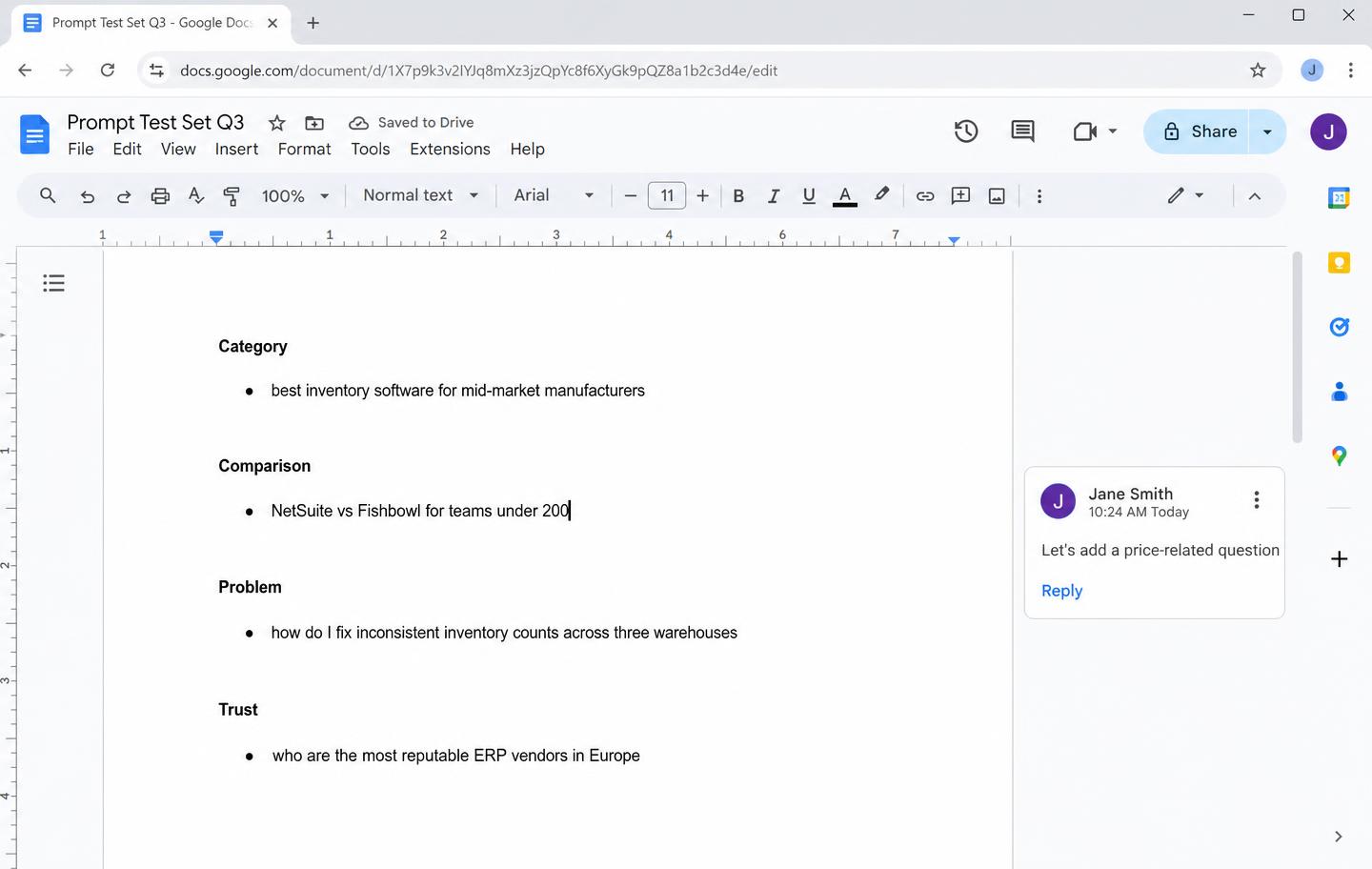
Step one. Write down the questions a serious buyer asks in the two weeks before they choose someone. Not keywords. Real sentences, the way a tired person types when they want a straight answer.
- →Best provider for the problem you solve, for a company our size.
- →Who do people use instead of your biggest competitor, and why.
- →How do I choose between the two approaches your category argues about.
- →What does this usually cost, and what changes the price.
- →Which companies are credible for my industry in my region.
Step two. Run each one in ChatGPT, Perplexity and Gemini.
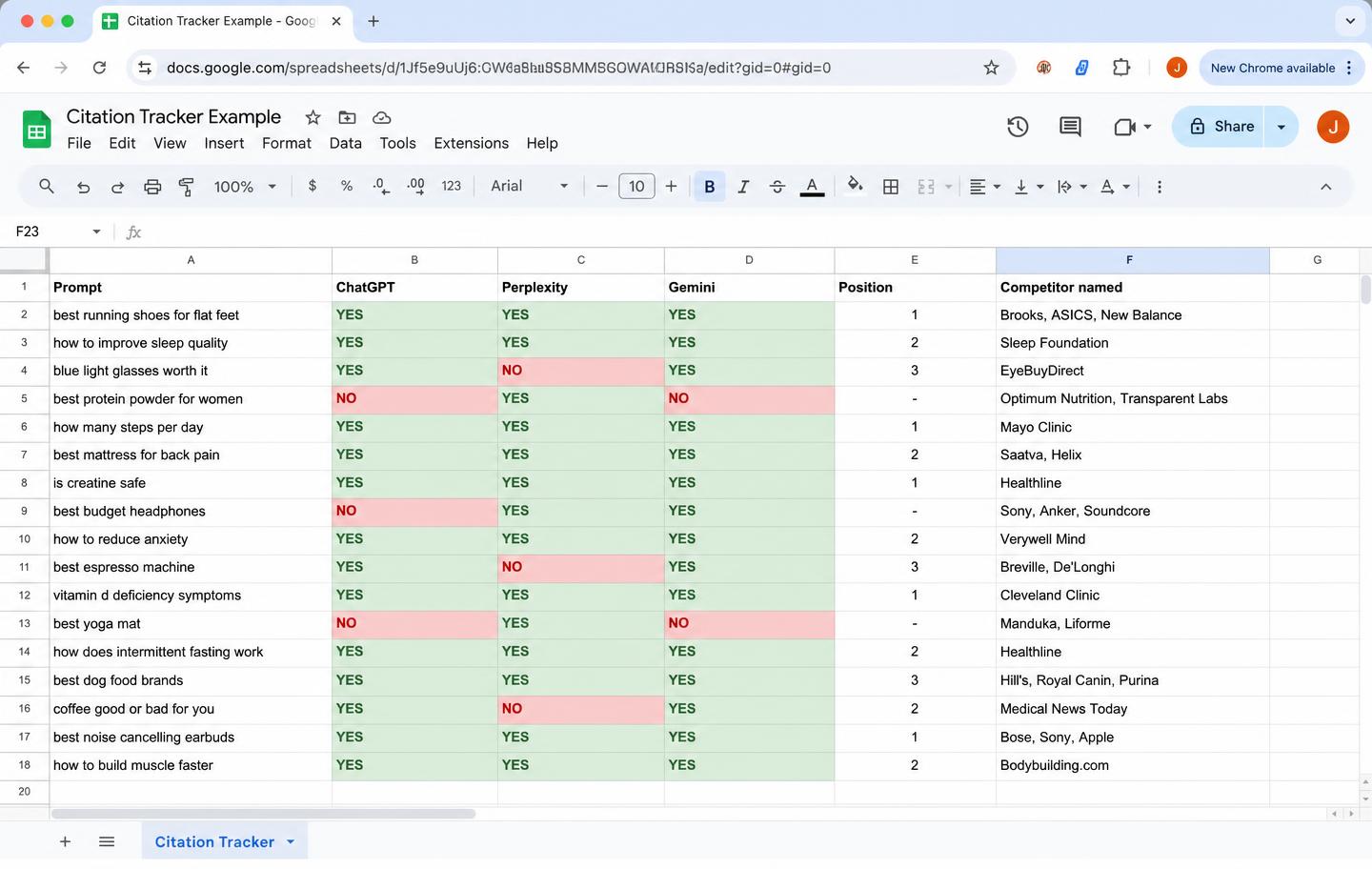
Step three. Write down who gets named, in what order, and which page got quoted as the source. A plain spreadsheet is fine.
Here is what usually shows up when I do this for a company.
- →They get named in a minority of the questions in their own category.
- →The pages being quoted are often not theirs at all. Review sites, forum threads, directories, someone else's roundup.
- →Their reputation is being assembled out of pages they do not control.
Do not want to do it yourself?
Run the free scan instead. It generates the questions your buyers actually ask, puts them to live AI models, and shows you whether you get named, buried or skipped, plus which companies get recommended in your place. Takes under a minute and no email is needed to see your score.
Run my free visibility scanWhy good companies get skipped
First time I saw this, I assumed it was a content problem. Write more, write better, get named. That was wrong and it cost me a few months.
Search rewarded position. You competed for a slot on a page, and the buyer picked from what they could see.
Assistants do not hand out slots. They write an answer. To be in it, you have to be the thing worth quoting.
A ranking is a place. A citation is a sentence.
I repeat that to clients because it changes what they publish. If you want to get named, you need sentences that still make sense when they are lifted off your page.
- →A price range, and the things that move it up or down.
- →A comparison that admits when the other option is the better fit.
- →A number with a date attached to it.
- →A plain statement of who you serve and who you do not.
Most company pages have none of that. They have positioning. Warm, confident, and impossible to quote.
Not sure which side yours falls on? The free scan reads your pages the way an assistant does and tells you what it could quote. Check my pages in the scan
The boring layer where most of the money is
Before an assistant can decide your answer is good, it has to be able to read it and be sure who it belongs to. Plenty of good companies fail right there and never find out.
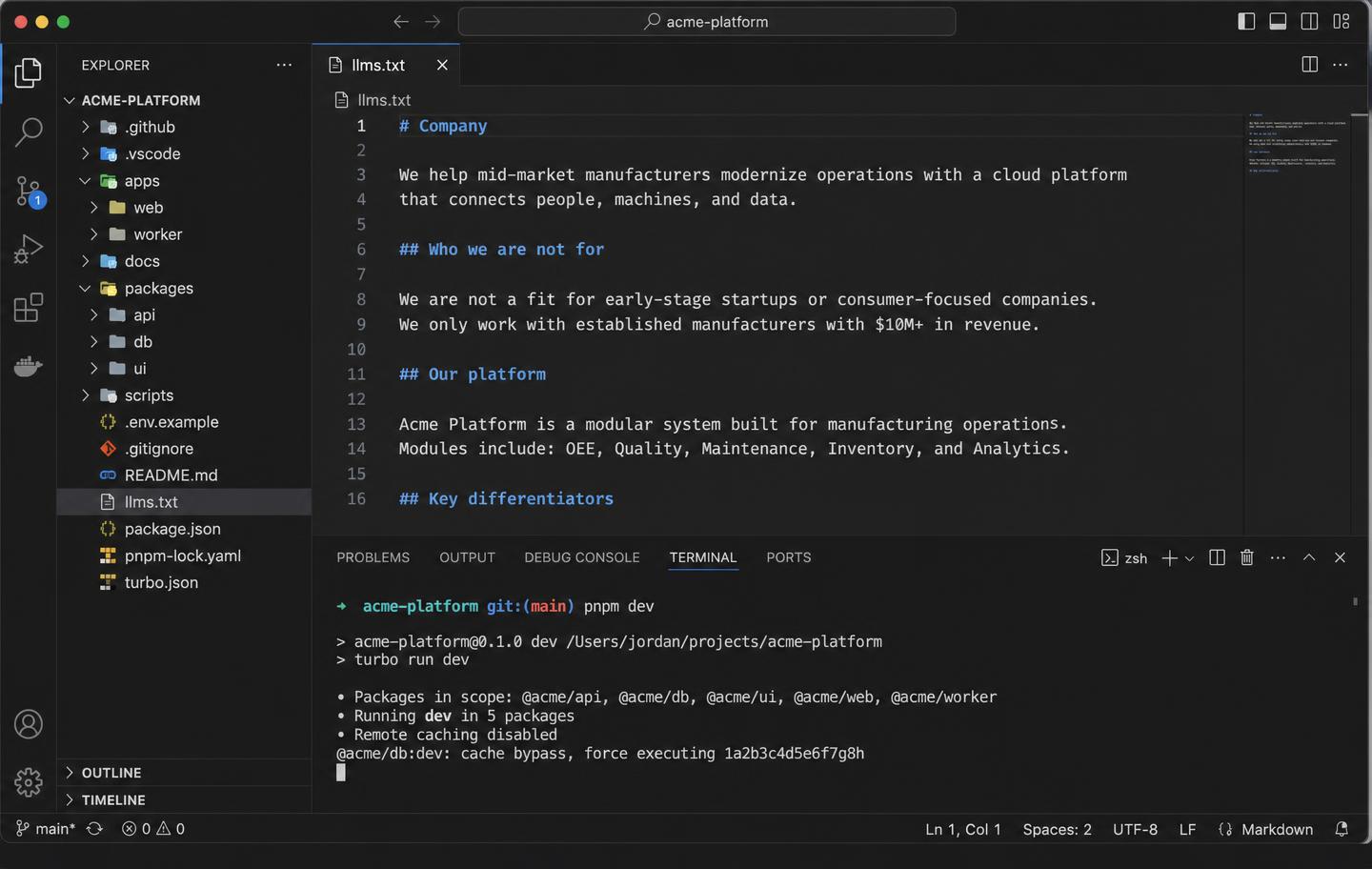
You do not need the technical detail. You just need to know the five failures, because all of them are fixable:
- →Your key claims only appear after scripts finish loading, so the text is effectively missing.
- →Your real answer is buried in a dropdown, a tab, a slider or a PDF.
- →Nothing on the page tells a machine what it is, who wrote it, or what it covers.
- →Your facts disagree with each other across your site, your profiles and your listings.
- →Nowhere do you plainly state who you serve, who you do not, and what you charge for.
Fix this and nothing changes on the surface. Your site looks identical to a human. To a machine it goes from vague to quotable, and that is the difference between being described and being named.
What we actually do about it, in three steps
We call it the Citation Loop. It is not clever. It is the version that survived contact with real accounts.
Step 1. We measure the answer, not the ranking
We build your question set out of your sales calls and your lost deal notes. Then we run it across the assistants and record who gets named and what gets quoted. That is your baseline, and everything after points back to it.
Step 2. We make your answers quotable and readable
We rewrite the pages that should be winning those questions so the answer is stated plainly and early, with the specifics a machine can reuse. Then we fix the layer underneath so the text is reachable and it is obvious the page belongs to you.
Step 1 is the part you can have right now, for free and in about a minute. Run my baseline scan
Step 3. We build the backup around you
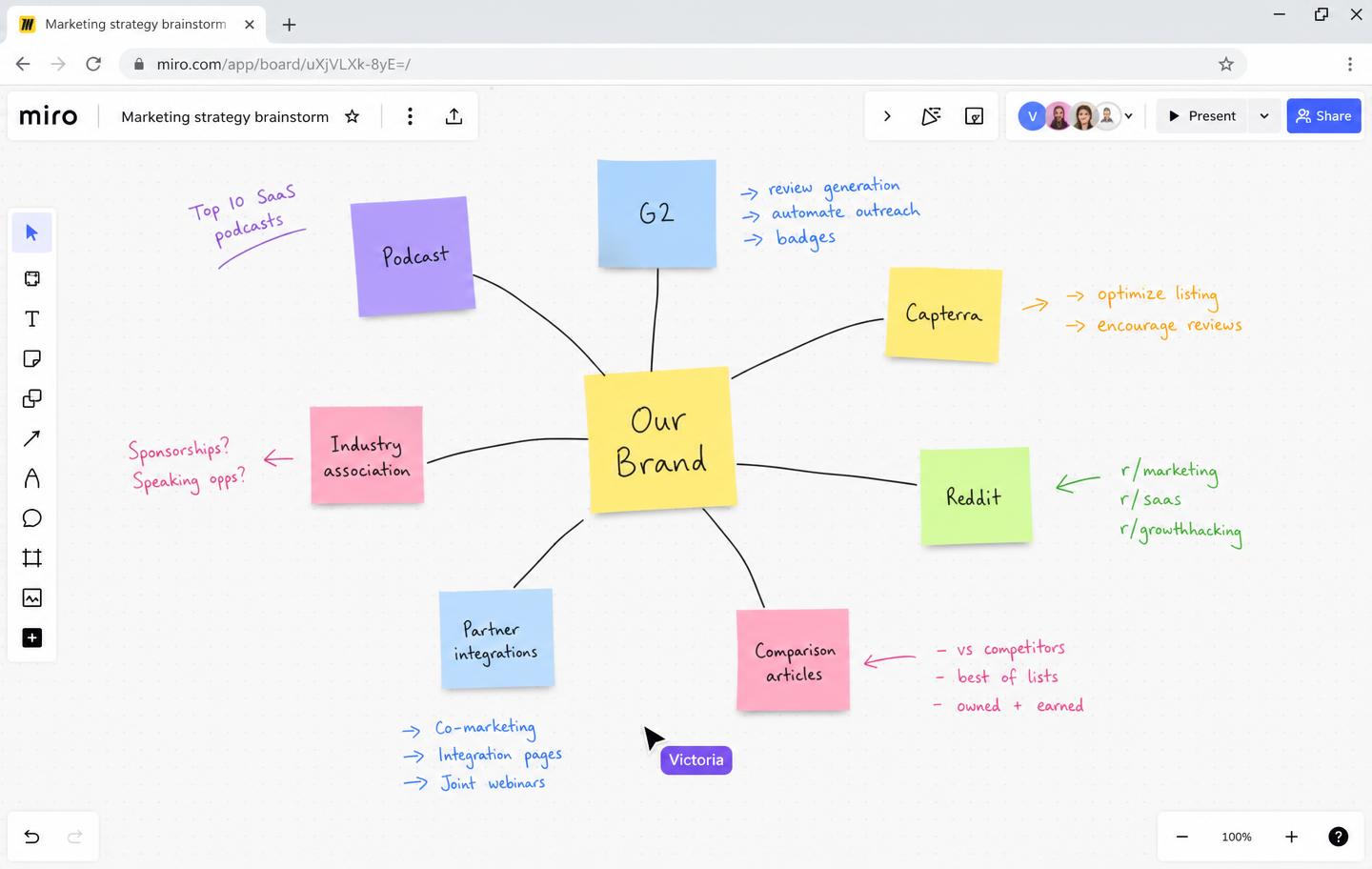
Assistants trust what is confirmed in more than one place. So we work the sources they already lean on in your category. Comparison pages, community threads, directories, industry roundups and your own profiles, all stating a consistent set of facts about you.
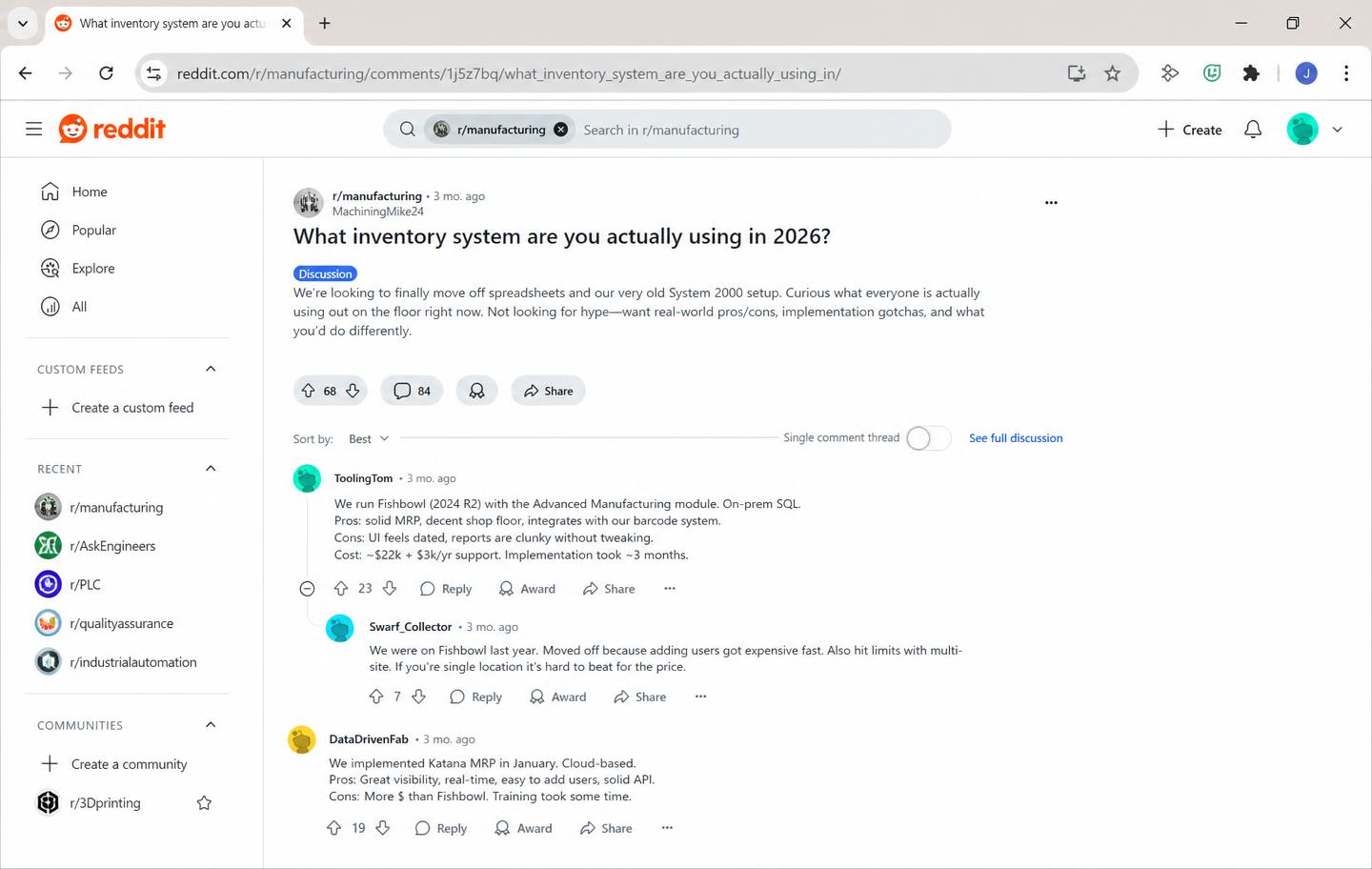
Then it loops. We rerun the question set, see what moved, and put the next round of work where the gap is.
It is a loop and not a project because the answers keep changing. Models update. Sources shift. Competitors publish. A one time cleanup decays.
See your side of it
Put your domain into the scan and watch it happen on your own category. You will see the questions, the answers, and the names that come back instead of yours.
Scan my category nowWho this is worth money to
If people buy from you in one click for a small amount, this matters less. Honestly.
If your buyer compares options, loops in colleagues and spends real budget, it matters a lot. That buyer does the research before they ever speak to you.
By the time they reach your sales team, the shortlist already exists.
Being on it is not a marketing nicety. It is the precondition for the conversation.
There is a side effect I did not expect either. The pages that earn citations turn out to be the same pages that answer the objections your sales team hears every week. Better answers in the chat window, better answers on the call.
What I am not going to promise you
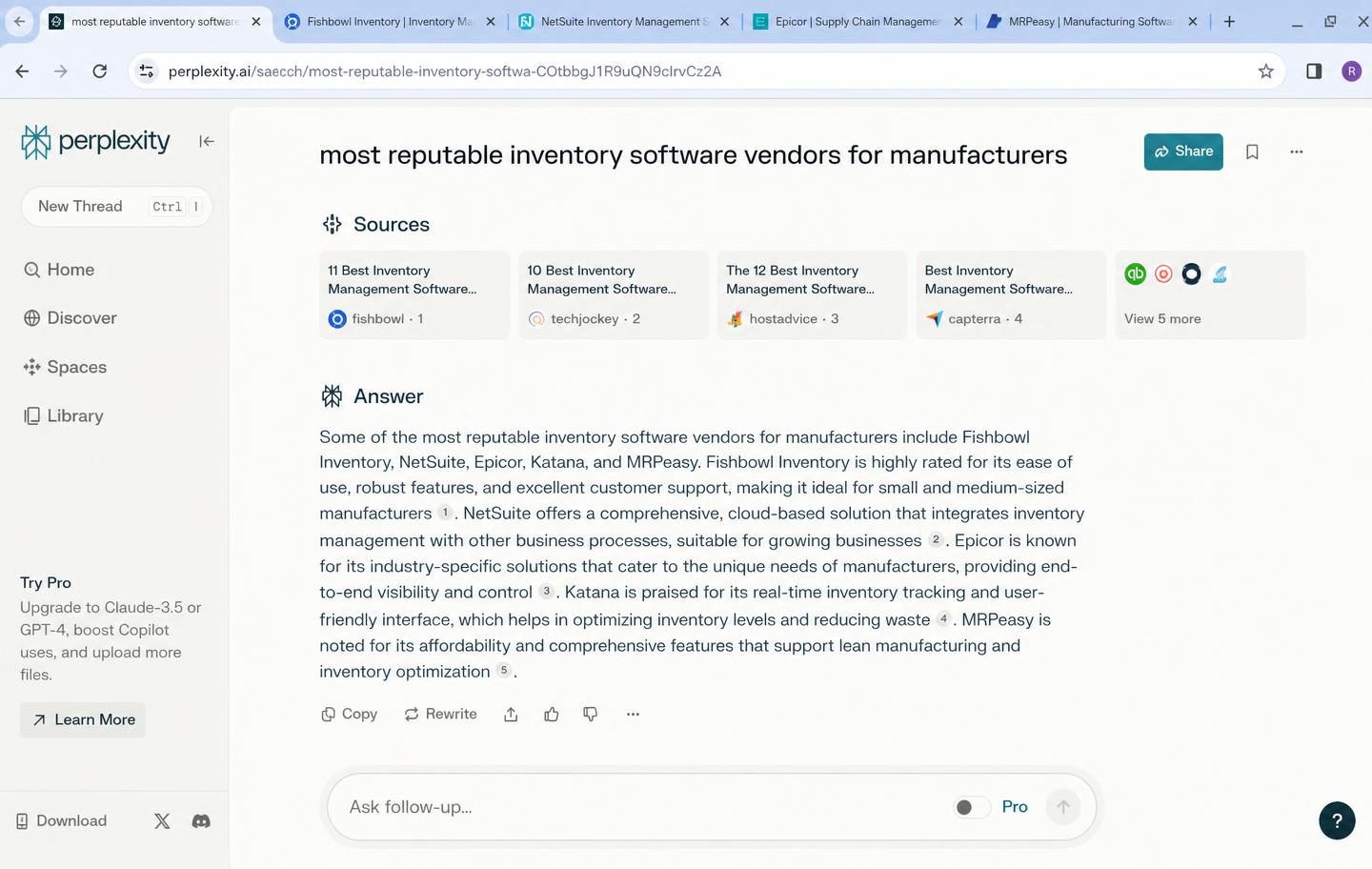
I am not going to quote you a guaranteed percentage. Anyone who does is describing something they do not control.
- →I cannot promise a specific spot in a specific assistant on a specific date.
- →I cannot promise results if you have no differentiated answer to give. This amplifies a real offer, it does not invent one.
- →I cannot promise speed in every case, because other people's publishing schedules are involved.
What I can do is show you where you stand today, make you readable and quotable, work the sources that decide your category, and report the movement against your baseline.
That is the honest version of the offer. It is the one I would want if I were buying.
Here is what to do next
I cannot tell you from here whether your buyers are being pointed somewhere else. That depends on your category, your competitors and what you have already published.
So do not take my word for it. Go and look.
- →The scan writes the questions your buyers actually ask.
- →It puts them to live AI models and records the answers.
- →You get a visibility score and the names that come back instead of yours.
- →It is free, it runs in under a minute, and no email is needed to see your score.
Free scan, no email to see your score
Find out who ChatGPT, Perplexity and Gemini name in your category right now. If the result is ugly, the scan will show you what to fix and you can book a 15 minute audit call from there.
Run my free visibility scanWritten by Michal Hajtas, founder of Red-engage. Images on this page are illustrations created to show the process described, not client screenshots or client data.